In the interview for CdM, Vice-Governor of the Central Bank of Montenegro, Mr Nikola Fabris, speaks about forecasts for the next year, whether there will be global economic growth slowdown and about what Montenegro can do to prevent that from happening. Mr Fabris also touches on the Montenegro’s key potential for attracting foreign investment and the current situation in the banking sector.
CdM: International financial institutions and various economists have forecast that this year the world will be hit by economic crisis and that economic growth will slow down. What are your predictions? Can we expect 2008 crisis?
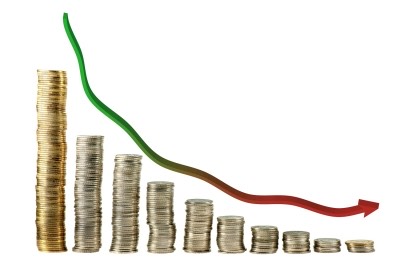
Fabris: According to international financial institutions, there will be global economy slowdown. IMF forecasts that global economy will go up by 3,4% in 2020, whereas WB projects 2,5% growth. Global slowdown is the consequence of the revival of geo-political tensions, trade protectionism, aggravated trade conditions, Brexit and, generally, lack of social mobility.
In my opinion, current economic uncertainties will lead to growth slowdown, bit not crisis effect. Key uncertainty is reflected in the unpredictable political decisions in the relations among great economic forces.
CdM: What Montenegro should and could do to protect itself in case the crisis occurs?
Fabris: As a small and open economy, Montenrgirn economy is, naturally, sensitive to external risks, especially of they are from the EU. However, when it comes to growth slowdown, we shouldn’t expect drama. We should respond to it by implementing measures of macroeconomic, fiscal and financial stability.
Hence, from the aspect of macroeconomic measures, it is necessary to continue to implement structural reforms aimed at improving competitive advantages of the national economy, creating new jobs, reducing economic and social imbalances. In the fiscal area, we must keep pursuing consistent fiscal consolidation policy. As for the financial area, it is essential that we stimulate and maintain healthy and stable financial and banking system and efficient payment transactions.
CdM: Montenegro has enormous potential for attracting FDI. Which sectors offer us chance for that?
Fabris: Key areas in which Montenegro has potential for attracting FDI are tourism, energy sector, agriculture and food industry.
Construction of a great number of hotel and accommodation capacities at the coast is currently underway. There are so many locations in the north which are not fully used.
As for the energy sector, we have great potential foe the production of electricity generated from renewable energy. There’s also room for investment in the improvement of the existing electricity and energy grid and increase in the level of integrity into regional energy market.
Agriculture sector is another area Montenegro could benefit from.
CdM: Public debt in Montenegro is pretty high. Is that alarming?
Fabris: Implementation of great infrastructure projects over the past several years has resulted in the increase in public debt. Gross public debt will reach 79,6% of GDP at the end of 2019. According to the Ministry of Finance, gold deposits will amount to around €550 million, and net public debt will amount to around 68% of GDP.
Although public debt is high, our country still hasn’t entered the critical zone, for two reasons: public debt increase was caused by the Eurobond issue (worth around €500 million), and therefore, in the first half of 2020, public debt will be on the downward trend. Secondly, completion of the greatest infrastructure project in Montenegro, highway construction, will gradually reduce public debt.
Consistent implementation of fiscal consolidation measures and regular repayment, level of public debt will fall to the 63,2% of GDP by 2022.
It is important to notice that all liabilities are services properly.
CB still believes that public debt is a key challenge our Government will be faced with in the forthcoming period. The Government must continue to implement fiscal consolidation measures and develop new, comprehensive Fiscal strategy with clearly defined measures and ways of bringing public debt to the level where it will be sustainable.

Stable banking systemCdM: What risks could Montenegro be exposed to in 2020?
Fabris: External risks will be the most important. They will be manifested in global economic slowdown and geo-political tensions among great forces.
CdM: What is the current state-of-affairs in the banking sector?
Fabris: Almost every banking indicators is at its historic maximum. Bank assets has increased, liquid assets amount to over €1,1 billion, bank capital exceeded €600 million, level of poor-quality loans has fallen, deposits went beyond €3,5 billion, loans exceeded €3 billion, interest rates are minimal. This clearly indicates that our banking system is table and liquid.
CdM: How to improve competitiveness of national economy and increase export?
Fabris: Raising the level of competitiveness is not a short-term process and it’s not carried out by the state only. A state is supposed to establish a stable and predictable environment and assist with some stimulating measures. However, enterprises take major responsibility.
We’ve set out a detailed review of measures in the Recommendations: assistance in the introduction of international quality standards, reduction of grey economy, promotion of the economy, regulatory reform, improvement of infrastructure, stimulating innovation and innovators…