Prime Minister, Mr Duško Marković, said today during Prime Minister’s Hour, that housing policy had demonstrated specific weaknesses and invited competent authorities to identify and examine those weaknesses. However, tackling housing issues is not a privilege, but rather a need, according to PM. He reiterates that highway will be open next year, pointing out that Montenegro needs it very much.
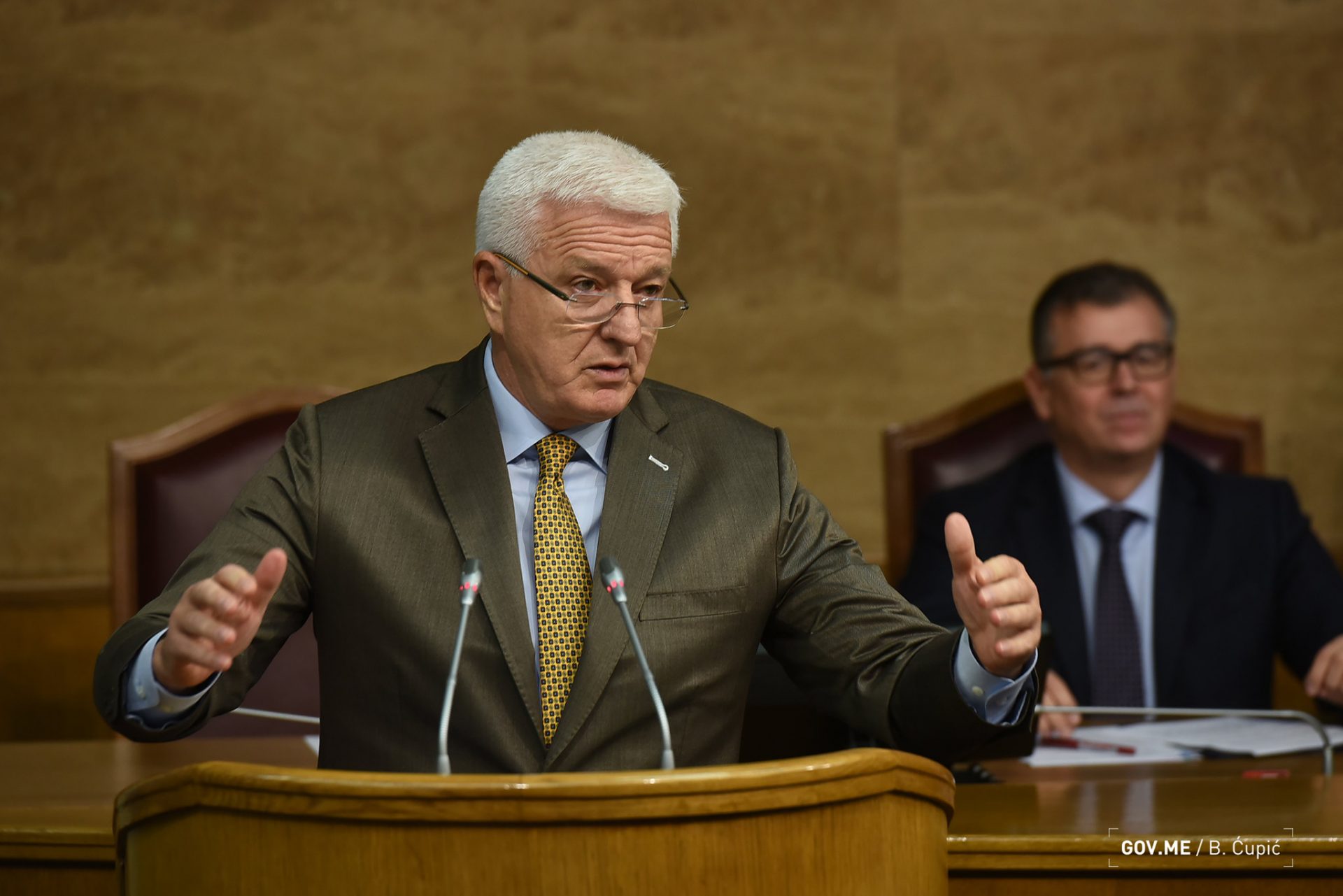
Tackling housing issues is a must
Mr Miodrag Lekić, asked Mr Marković if he would take concrete activities to consider and abolish unconstitutional and immoral decisions in party-clan-functionary structure regarding allocation of apartments and loans under conditions that “are not applicable to citizens of this country”.
Mr Marković said that housing policy had, indeed, demonstrated specific weaknesses and shortcomings.
“As Prime Minister, I made the data public and I called on the competent authorities to identify and examine those weaknesses. Tackling housing issues is, in my opinion, a need”, pointed out Mr Marković.
He reminds that the Government has accepted the initiative launched by the Council of the Agency for the Prevention of Corruption on the necessity for making detailed analysis if legislative framework regulating housing issues.
“If the Government or institutions made a mistake, we are going to correct it. I think this policy is necessary and it has to encompass state officials, it has to be public, transparent and never abused. If there have been any mistakes, do not hold responsible those who were given apartments. I am responsible and I am ready to take on that responsibility”, said Mr Marković.
He points out that 459 employees in the education sector, 167 in healthcare sector, 992 employees in security institutions and 223 Army members have had their housing issues settled or the process thereof is under way.
PRM said that there was a clear legislative framework that allowed country to deal with housing issues of the entire public sector.
Montenegro needs the highway very much
Mr Goran Danilović, member of the Special caucus asked Mr Marković about the Podgorica-Mateševo highway section and when the continuation of works from Mateševo to Boljare had been planned.
“The highway will be finished next year. According to the contractor, by 30 September 2020. For me, that moment will be priceless. Montenegro needs this projects, it is essential”, pointed out Mr Marković.
Government won’t regret a cent spent on preventing young people from leaving
DPS member, Ms Aleksandra Vuković, wanted to know what measures the Government “takes to enhance innovation in economy and support fast-growing companies”.
“People in Montenegro are still very skeptical about innovation. However, in 2018, Ministry of Science gave grants in the amount of €100.000. Around 50 engineers and researchers were provided with jobs thanks to 20 projects. Therefore, young people in Montenegro will work on new contents and creations right here, in Montenegro”, said Mr Marković.
He reminds that Government formed a Science and Technology park and launched adaptation of the building in the University campus.
“It will be a basis for work, synergy of innovative companies, academic community, students, youth and individual innovators. The investment in the part is worth around €12 million”, said PM.
Mr Marković concluded that Government had never imposed limits on innovation and that it was working intensely on strengthening our innovation eco-system.
Government is not place for discussion on Duško Knežević
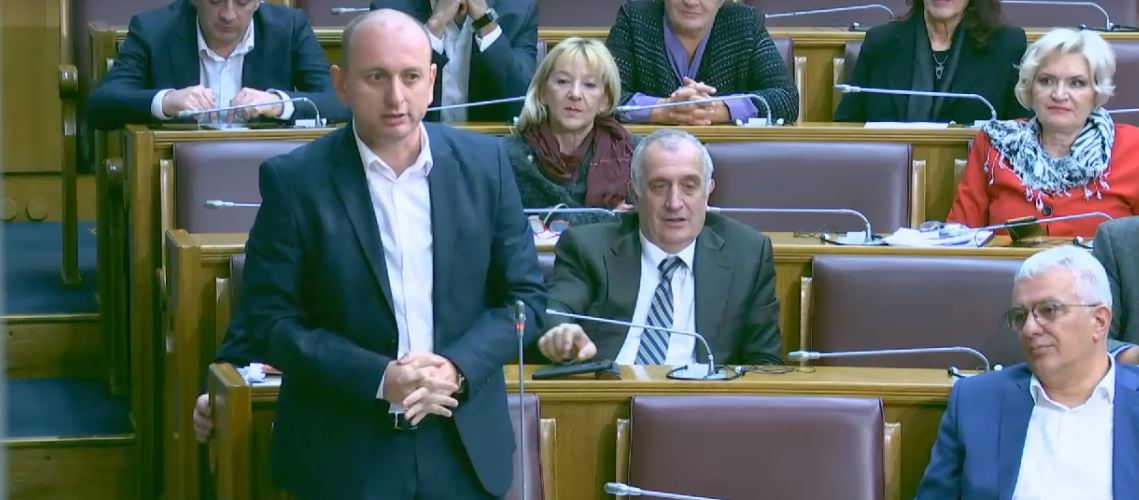
Mr Milan Knežević asked PM if Special State Prosecutor’s Office’s claims that Duško Knežević had evaded around €550 million of taxes were true.
“If that is true, what did you do to protect the economic system of our country?”, asked Mr Milan Knežević.
Mr Marković said those questions fell under the competence of the Prosecutor’s Office.
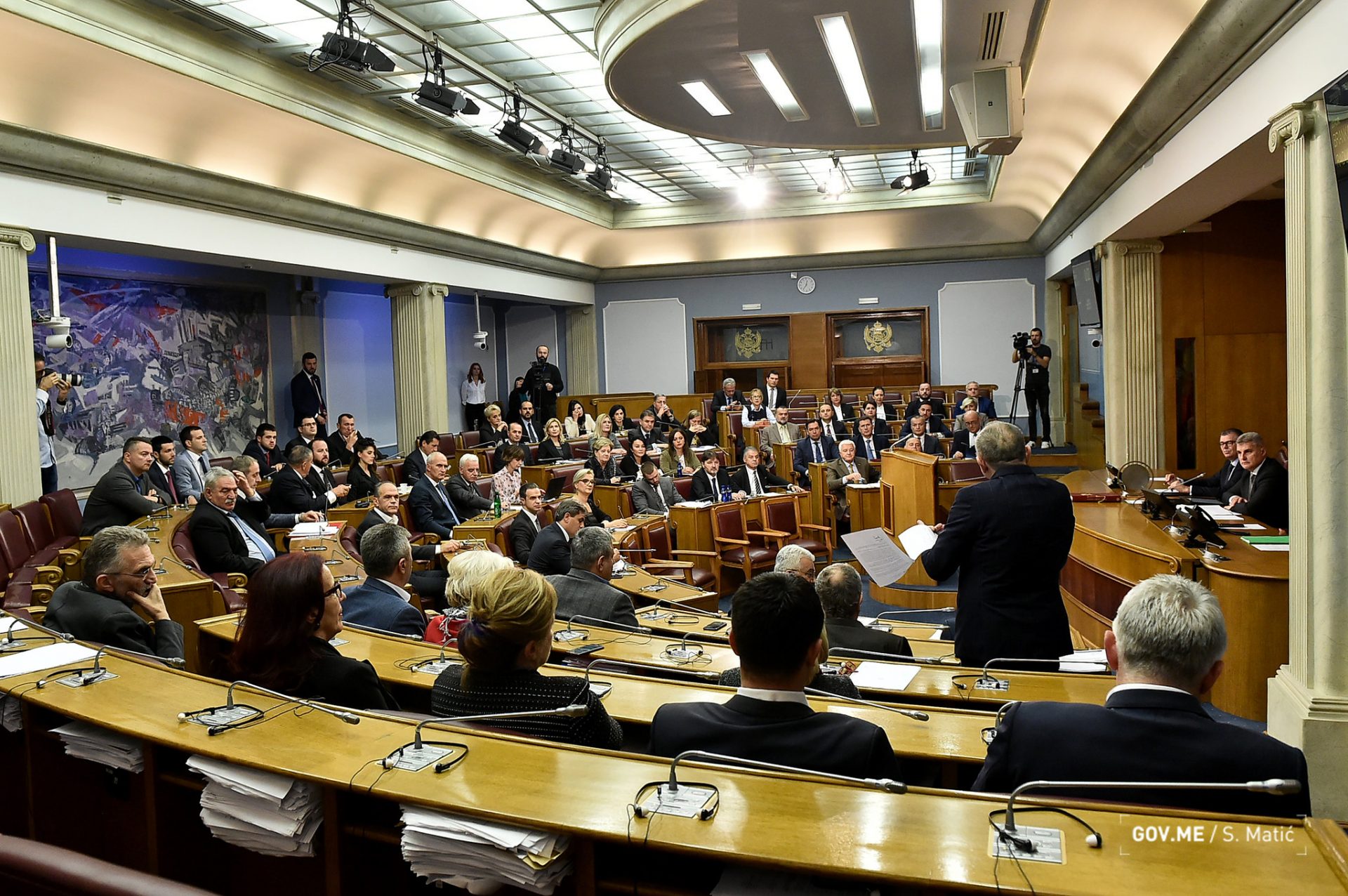
“You should ask that Special State Prosecutor’s Office, not president of the Government. That’s not my job”, said Mr Marković.
He reiterated that the Government wasn’t in charge of initiating investigation, bringing indictments, controlling them, or delivering judgments.

PM said that the Government had been working on the improvement of normative solutions, strengthening institutions and putting emphasis on better staff policy.
He added that Fund for the protection of deposit would double the deposit coverage and reduce time limit for payments to secured deponents.
“Neither you, nor anybody can deny the fact that our economy has been recording considerable growth, which is result of consistent Government policies and contribution of all actors that take part in Montenegro’s economy”, said Mr Marković.
Non-paper doesn’t say that Montenegro is a slave country
Mr Ranko Krivokapić, member of Socialist Democratic Party (SDP), asked Mr Marković how Montenegro “will overcome the apparent deepening of political instability, negative rhythm and regress in the key area of the integration process”.

“Non-paper should be read integrally. We find it positive and state that it shows progress in the rule of law. Your thesis isn’t mentioned anywhere”, points out Mr Marković.
This document indicates progress in key areas.
“It never says Montenegro is a slave country”, stresses Mr Marković.
He says it is still very early to talk about the impact of specific initiatives related to the negotiation process in Montenegro.
He says that Montenegro’s Government won’t allow the rule of law to halt.
However, Mr Krivokapić insists that France said it was frustrated with Montenegro and Serbia.
“Such documents serve us as guideline but they also confirm our maturity in the forthcoming phases of the implementation of reforms”, said Mr Marković.
Government has no influence on policy for employees or program solutions of the Radio and Television of Montenegro
Mr Ervin Ibrahimović asked if the Government planned to make Bosniaks more present in program and staff structure of the Public Service.
Mr Marković said that Montenegro was a unique example of multi-national and multi-religious harmony and that social cohesion was a firm basis of Montenegro’s overall progress. He added that Government had no influences on the decision-making process of the Public Service, or on its policies.
“Law on National Public Broadcasting Service and RTCG’s internal enactments define its independence in the production of programs”, said Mr Marković.
Mr Marković concluded that the policy of the employees in the Radio and TV of Montenegro should be regulated according to strictly defined legislative procedure.