Ministry of Foreign Affairs of Montenegro forbade on 22 January Minister-adviser in the Embassy of Serbia to Podgorica, Mr Ljubiša Ljuba Milanović, to enter Montenegrin state institutions and make contacts with the officers after it discovered that the Serbian diplomat was a source of false information that Kosovo special police forces will come to Montenegro on 6 January to support Montenegrin police.
Minister of Foreign Affairs of Serbia, Mr Ivica Dačič, confirmed the information himself.
Reacting to the Novosti text, Mr Dačić pointed out that Serbia had taken a reciprocal measure forbidding the second person in the Embassy, Ms Ana Ražnatović, to enter state institutions of Serbia.
However, Serbian minister elided something important: the two ministries agreed to know everything about the backstage activities of their security adviser aimed at not informing the public about the incident. Montenegro didn’t send written notice and it didn’t declare Mr Milanović persona non grata and Serbia practically denied being responsible for the actions of the security adviser.
Two nights ago, Mr Ivica Dačić essentially confirmed that Mr Ljubiša Milanović hadn’t acted arbitrarily.
Crucial information can’t be kept secret forever though. Mr Dačić has practically opened the Pandora box. Former editor in chief of FOS, medium that released false information endangering national security, Ms Anđela Đikanović, was sentenced to prosecutorial detention.
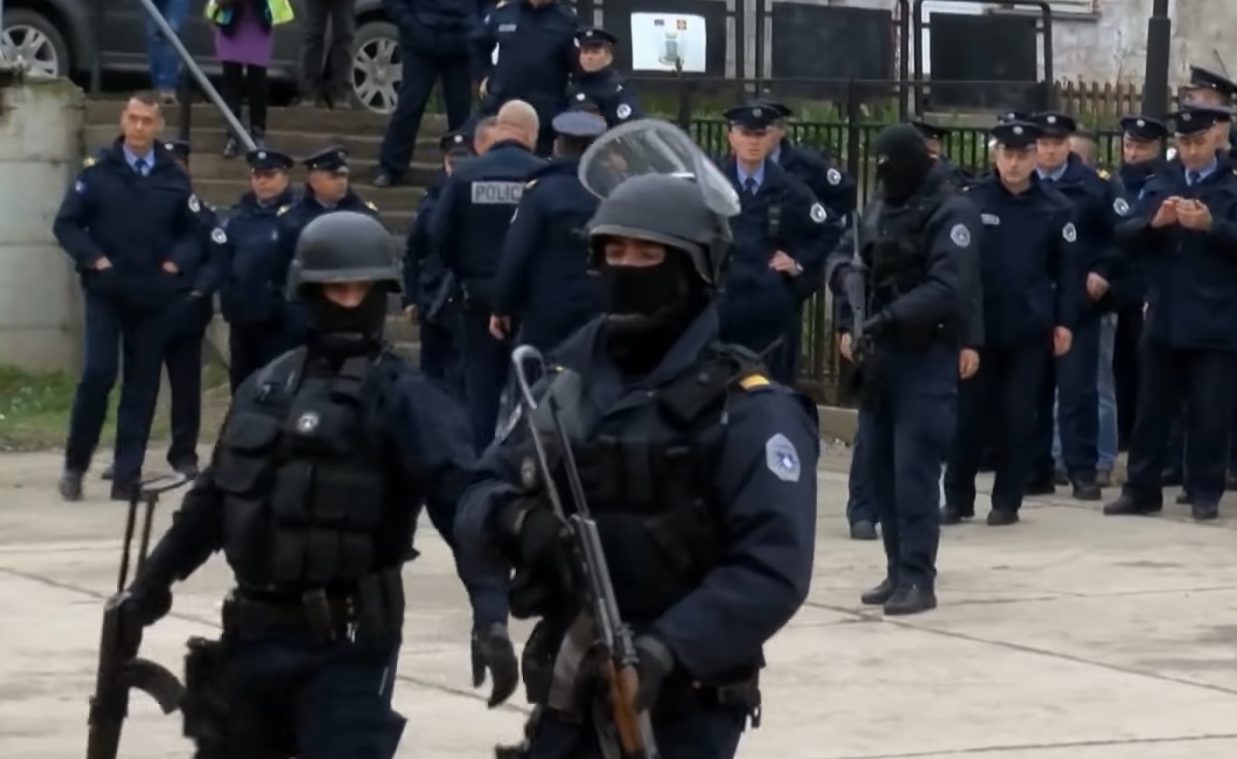
While interrogated, Ms Đikanović declined to provide written confirmation of the source but she said the source “is reliable and from high diplomatic circles”.
After searching communications on her mobile phone and paring confidential data of the Montenegrin service with its counterparts from Zagreb, the circle closed. The investigation suggested the “reliable diplomatic source” was Minister-Adviser, Ljubiša Milanović.
That’s why the Ministry of External Affairs informed the Embassy of Serbia that Milanović has been forbidden to communicate with the ministries, state services and agencies. However, he hasn’t been forbidden to stay in Montenegro and to communicate within his usual diplomatic corps.
In a statement for Pobjeda, Mr Milanović declined to comment on the decision of the Ministry of Foreign Affairs of Montenegro.
The balance and the viper
Milanović’s biography indicates that he’s a man with vast police and life experience.
He was appointed minister-adviser in the Embassy of Serbia at the end of 2018.
The news that Milanović will be engaged in the Embassy of Serbia was published by Politika, in a text calling Milanović “Serbian Eliot Ness”.
“As en experienced operational agent, Milanović would be engaged in the protection of Serbian from Montenegrin criminal groups”, Politika wrote.
Mr Milanović had a long career in police department: until 1994, he served as Head of the Department for Blood crimes. After Radovan Stojčić Badža was killed, Milanović said that Mr Jovica Stanišić, chief of all security services at the time, should resign if he was unable to find out who murdered his main operative.
Under unrelenting pressure, he leaves police and starts to work as a lawyer. However, there were some things that the then chiefs in Belgrade couldn’t forget him. In 1997, Mr Milanović ended up in prison. He was arrested in Niš on suspicion of committing criminal offence of “production and sale of drugs”.
District court in Niš held him in prison for more than four months and then all charges were dismissed. The police action he was arrested in had a code name “Balance” and Milanović soon was nicknamed Balance because the police found a balance for measuring the drugs while searching his house.
Milanović’s new ascent in the police career happened after the regime of Slobodan Miloševič broke. After the transitional government of Serbia was formed, police com-minister, Mr Božo Prelević, tasked Milanovič with forming special police operative group nicknamed “Viper”, in order to deal with organized crime. Milanović invites the most experienced colleagues and in only three months the “White book of the Serbian mafia” was formed. It was in charge of solving the most complex crimes committed in late 1990s.

After DOS removed Milanović, he started performing not so important activities and he was out of the range of wide public.
But he thought about his own career and foresaw his own “bright future” by becoming member of the Aleksandar Vučić’s party.
Montenegrin job
And then he came to Montenegro two and a half years ago. He showed initiative straight away, establishing connections with security services counterparts and the media.
Milanović introduced himself as a person who is able to help journalists in revealing hidden connections among criminal circles in Podgorica and Belgrade.
The fact that he insisted on personal contacts and meetings outside his working environment indicates that he was trying to collect additional information. Although he promised a lot, seems like he collected more than he provided.
Apart from great interest in the “process of the century”, Mr Milanović also took interest in the political situation. He followed “Resist” protests and other big political manifestations in Montenegro.
It’s quite logical that Ljubiša Milanović was the most convenient person to provide relevant information.
False news about ROSU special agents were part of those “special activities” that can be performed only by skillful and experienced person.