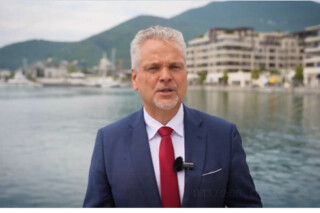
Organized by the Association of Lawyers of Montenegro (UPCG), the 27th session of the IUS Forum was held last night in the packed hall of the Culture and Information Centre on State, Law, Religion – Crisis of Secularism.
Opening the session, the UPCG president, prof. Branislav Radulovic, PhD recalled that secularism appeared in Western civilization as part of the “enlightenment movement and modernization of society freed from the rule of religion and superstition”. Rejecting the idea of a state religion, secularism is not the same as atheism and received its first legal foundation in the US and French constitutions.”
Dragan Veselinov, PhD, a political scientist and professor at the Faculty of Political Sciences in Belgrade, recalled the history of secularism in Europe and warned that both Serbia and Montenegro “are in an era of anti-secularism where the symbiosis of religion and politics leads to the decay of civil government.” In addition, he pointed out that there was no “battle for Christians” on stage, but that the interest of the church is “the national conversion of Montenegrins into Serbs”. It opposes civil democratic forces and does not promote the ideology of Christianity, but its own interest, often financially motivated.
At the Forum, the Index of Secularism was presented, which showed that, of all European countries, in the period from 2004 to 2023, Montenegro had the biggest decline in terms of secular organization and joined the ranks of countries like Tunisia, Lebanon and Turkey.
Historian Milos Vukanovic, a scientific associate at the UDG University, stated that during the construction of the modern Montenegrin nation, secular principles of religious tolerance, secular election of church officials and state ownership of church property were integrated.