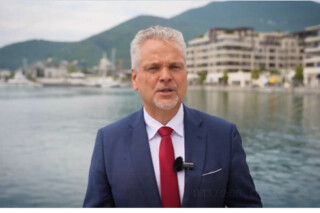
MEP Reinhold Lopatka who is, among other things, the so-called shadow rapporteur for Montenegro said in an interview for Pobjeda that Montenegro’s rapid progress toward EU membership requires adherence to the Constitution and constitutional principles. He stressed that constructive dialogue among all political actors is crucial for progress. In his role as the European Parliament’s rapporteur for Montenegro, Lopatka visited the country in December, meeting with key officials such as Prime Minister Milojko Spajic, Minister of European Affairs Maida Gorcevic, and Minister of Foreign Affairs Ervin Ibrahimovic. He noted that these officials were all united in their belief that Montenegro could achieve the goal of closing all negotiation chapters by the end of 2026. Lopatka also highlighted the importance of securing support from all EU member states to help Montenegro in this process.
Lopatka discussed the ambitious goal set by Montenegrin leaders to have the country become a full EU member by 2028, emphasizing that this requires rapid progress and extensive reforms. He believes that while the timeline is challenging, it is important to maintain momentum and focus on results. Lopatka sees Montenegro’s EU membership as beneficial not only for the country but also for Europe, revitalizing the EU enlargement process and bringing the Western Balkans closer to Europe. He also highlights trade, economic opportunities, and regional stability as key benefits. He acknowledged good progress in Montenegro’s EU integration, as confirmed by the European Commission, though challenges remain, particularly in the rule of law, which will be addressed in future reports.
Lopatka addressed concerns about the ongoing crisis related to the Constitutional Court in Montenegro, stating that the appointment of judges in 2023 was a necessary and significant step forward. He noted that there had been no EU warnings regarding the suspension of Montenegro’s accession negotiations in the past two years. However, he acknowledged that the recent issue concerning a judge’s retirement raised valid concerns. The European Commission rightly expressed that decisions about the judge’s mandate should fall under the Constitutional Court’s jurisdiction, not the Parliament. Following this, EU ambassadors proposed involving the Venice Commission to mediate and offer solutions. Lopatka emphasized that constructive dialogue and respect for constitutional principles are essential for Montenegro’s rapid EU progress.
Lopatka highlighted that public opinion polls consistently show strong support among Montenegrins for EU membership, with all political parties advocating for integration. He believes this reflects a broad consensus and unity on the goal of joining the EU, emphasizing the importance of political actors working together toward this common objective. However, he cautioned that, in practice, Montenegro still faces significant challenges in achieving the political unity necessary to advance the country’s EU aspirations.
Lopatka praised initiatives like the “Barometer 26” platform, which aims to unite political actors in Montenegro, including both the ruling coalition and opposition parties. He sees the platform, launched in November, as a positive step toward bridging political divisions and promoting national cohesion. It emphasizes Montenegro’s goal of completing EU accession negotiations by the end of 2026 and underscores the importance of national unity, cooperation, and a constructive political climate. Lopatka concluded that overcoming divisions and achieving unity requires continuous efforts to foster a political culture that prioritizes national interests.